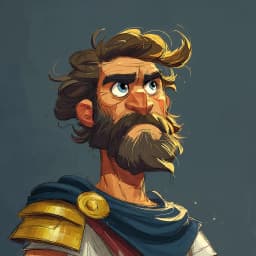
Xenophon
Xenophōn
Son of Gryllus of the Attic deme of Erchia, born c. 430 BC, student of Socrates (Diog. Laert. 2.48–49), and a lifelong Lakoniser — the fourth-century Athenian gentleman whose political and religious conservatism estranged him from post-404 democratic Athens. In 401 BC his Theban friend Proxenus invited him to join Cyrus the Younger's expedition; Socrates warned him the venture would make him persona non grata in Athens and sent him to consult Delphi first (Xen. *Anab.* 3.1.4–8, where the younger Xenophon deliberately framed his question to Apollo to avoid having to ask whether to go at all). After Cunaxa and the murder of the Greek generals by Tissaphernes at the Zab (Xen. *Anab.* 2.5), he was elected one of the five new generals of the Ten Thousand on the night of the army's crisis (Xen. 3.1.11–32 for the midnight dream and council, 3.1.46–47 for the acclamation — the one set-piece autobiographical scene of the whole work), and led the army north through Armenia and Chalybia to the Black Sea at Trapezus. Exiled from Athens for Medising (for fighting with Cyrus and subsequently with Agesilaus of Sparta), he spent the middle decades of his life on a Spartan-granted estate at Scillus in Elis; his lost wife Philesia gave him two sons. Works: *Anabasis* 1–7 (the Ten Thousand), *Hellenica* 1–7 (continuation of Thucydides to 362), *Cyropaedia*, *Memorabilia*, *Oeconomicus*, *Hiero*, *Hellenic Constitution*, and the minor equestrian + household treatises.