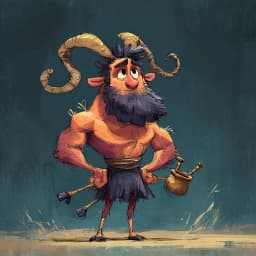
The Satyrs
Satyroi
Goat-eared, snub-nosed, horse-tailed (and sometimes goat-legged) male spirits of the wild — the chorus of Dionysus's thiasos. In the archaic and classical tradition they have horse-features rather than goat-features; the goat-legged 'Pan-like' satyr is a Hellenistic and Roman development. They follow Dionysus through every campaign of his cult, dance the choros, play the aulos, drink unmixed wine, and chase the maenads and the nymphs. Their genealogy is loose — sometimes brothers of the Curetes and the mountain-nymphs in the Hesiodic *Catalogue* fragment (fr. 10a M-W), sometimes sons of Hermes and a nymph — and the great surviving satyr-play, Euripides's *Cyclops*, brings them ashore on Sicily with their leader Silenus. The satyr-play was the closing piece of every tragic tetralogy at the City Dionysia: three tragedies and a satyr-chorus to send the audience home laughing.
Origin
Forest-spirits of Dionysus's thiasos; horse-eared, snub-nosed, tailed in archaic and classical iconography (vases, Euripides *Cyclops*).