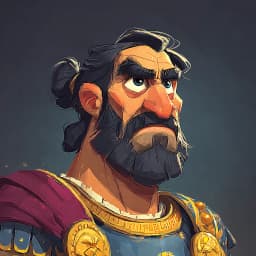
Perdiccas
Perdikkas
Son of Orontes of Orestis in upper Macedonia, of the Argead-related noble line that had since the fourth century supplied senior Companions to the royal house. Distinct from Perdiccas III of Macedon (the brother of Philip II killed by the Illyrians in 359 BC, see entity `perdiccas-iii`). Senior Companion at Alexander's court from the Asian campaign onwards; on the deathbed at Babylon (Diod. 17.117.4 + Curt. 10.5.4) Alexander handed him his ring — the ambiguous gesture the surviving tradition reads as the designation of his successor, though no formal succession existed. After the Babylon Settlement of June 323 (Diod. 18.2–4) was named *epimelētēs* (regent) and *chiliarch* of Asia, holding the central royal army and the joint kings Philip III Arrhidaeus and the unborn Alexander IV. Provoked the first Diadochic war by attempting to marry Alexander's full sister Cleopatra (the bid for the Argead succession) and by demanding the central treasury and the royal funeral cortège be held under his control rather than diverted to Egypt; led the central royal army into Egypt against Ptolemy in summer 321. Killed in his own tent on the Nile after three failed crossings of the Pelusiac branch — two thousand Macedonians drowned in the third attempt at the Camel Fort opposite Memphis (Diod. 18.33–36) — by his own officers Peithon, Seleucus, and Antigenes the Silver-Shields commander.
Origin
Macedonian noble line of Orestis; son of Orontes; not to be confused with Perdiccas III of Macedon (brother of Philip II).