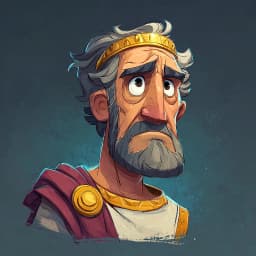
Eurystheus
Eurystheus
King of Mycenae, grandson of Perseus through his father Sthenelus (Apollodorus *Bibliotheca* 2.4.5; Hom. *Il.* 19.95–133 preserves the Zeus-and-Hera dispute that gave him precedence over his cousin Heracles). He imposed the Twelve Labours on Heracles and, on the hero's death, pursued his children across Greece demanding their surrender from every king who sheltered them — Ceyx at Trachis, Demophon at Athens (Apollod. 2.8.1; Eur. *Heraclidae*). In the battle before Athens he was routed and fled north by chariot along the Saronic coast; Hyllus overtook him on the Scironian cliffs and killed him there, in Apollodorus cutting off his head on the cliff itself. In Euripides's *Heraclidae* 928–1055 Iolaus captures him alive and brings him to Athens, where Heracles's mother Alcmene demands and secures his execution — his own dying prophecy is that his body buried on Attic soil will defend Athens against the Spartan Heraclid descendants in a future war. He and Heracles were first cousins once removed through Perseus: Eurystheus grandson of Perseus via Sthenelus, Heracles great-grandson via Electryon and Alcmene (Apollod. 2.4.5–6).
Origin
Son of Sthenelus son of Perseus; kin of Heracles through their shared descent from Perseus — Eurystheus grandson via Sthenelus, Heracles great-grandson via Electryon and Alcmene (Apollod. 2.4.5–6; Hom. *Il.* 19.95–133).