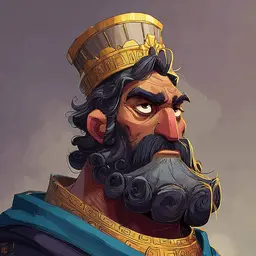
Cyrus the Great
Kyros
Founder of the Achaemenid Empire and, to the Greeks who would later fight his successors, the pattern of the just conqueror. Herodotus tells his origin as folklore: the Median king Astyages, frightened by dreams that his daughter Mandane's son would supplant him, orders the infant exposed, but the herdsman charged with the deed rears him instead, and the boy's bearing betrays his royal blood (Hdt. 1.107–122). Grown, Cyrus raises Persia against Media and dethrones his own grandfather (Hdt. 1.123–130). About 546 BC he overthrows Croesus of Lydia and takes Sardis — the scene where the captured Croesus, set on the pyre, cries out the name of Solon is the hinge that ties Cyrus to the Athenian sage (Hdt. 1.84–87). In 539 he takes Babylon by turning the Euphrates aside and marching into the city along the drained channel while its people keep a festival (Hdt. 1.188–191). He dies about 530 campaigning beyond the Oxus against the Massagetae and their queen Tomyris, who — in the version Herodotus calls the most credible — thrusts his severed head into a vessel of blood to glut at last his thirst for it (Hdt. 1.201–214). His capital and tomb stood at Pasargadae; the empire he built was the one Darius and Xerxes later turned against Greece.
Origin
Persian Achaemenid line; in Herodotus's account the son of Cambyses I and Mandane, daughter of the Median king Astyages.