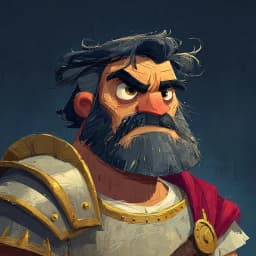
Cleon
Kleon
Son of Cleaenetus, owner of an Athenian tannery. Took up the political leadership of the Athenian assembly after Pericles's death in 429 — Thucydides 3.36.6 calls him at this period 'the most violent of the citizens, and at this time by far the most influential', the unforgiving political register the historian sustains throughout the *History*. Carried the original motion in the Mytilenean assembly (427) to put to death the entire male population, then lost the second-day reversal to Diodotus (Thuc. 3.36–49). Caught in his own boast in 425, when, having attacked the generals' competence in handling Sphacteria, he was offered the command himself by Nicias and forced to take it; vowed before the assembly to bring the Spartan prisoners to Athens within twenty days, and did (Thuc. 4.27–39, the central narrative irony of Book 4 — the demagogue Thucydides most despises delivers the only verifiable strategic success of the early war). Sent north against Brasidas in 422; killed in the engagement before the walls of Amphipolis when he attempted to withdraw and was caught half-deployed by the Spartan attack: 'Cleon, who from the first had no thought of fighting, at once fled and was overtaken and slain by a Myrcinian targeteer' (Thuc. 5.10.9). Aristophanes had pilloried him in the *Knights* of 424 in person — the theatrical mask was so close to Cleon's actual face that the maskmaker refused the commission and Aristophanes had to play the part himself.