Ascanius
Askanios
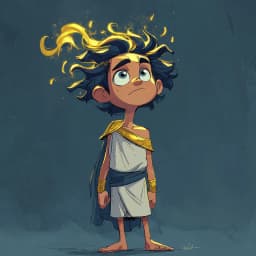
Son of Aeneas and Creusa (in Virgil; in some earlier traditions son of Lavinia — Dionysius of Halicarnassus 1.70.1–3 records the disagreement). The boy who walks out of Troy holding his father's hand at *Aen.* 2.721–724 ('parvus Iulus / implicuit sequiturque patrem non passibus aequis,' the little Iulus grasped my hand and followed his father on unequal steps — one of the most-quoted scenes in Latin poetry), with the flame-portent that settled on his hair without burning him, the omen that decided Anchises to leave. Known also as Iulus, the name Virgil chose to anchor the gens Iulia to the Trojan founder — Julius Caesar and Augustus both claimed direct descent from him. After the Italian settlement and the death of Aeneas he moved the capital from Lavinium to a new foundation on the slopes of the Alban Mount, Alba Longa, thirty years after Aeneas's landing (Livy 1.3.1–3; Dion. Hal. 1.66.1); Alba Longa ruled the Latins for four hundred years until the brothers Numitor and Amulius, and from Numitor's line would come Romulus and Remus.
Origin
Son of Aeneas and Creusa (Virg. *Aen.* 2.666 + 2.747), called Iulus in the Roman tradition to anchor the gens Iulia; founder of Alba Longa a generation after his father's Lavinium (Livy 1.3; Dion. Hal. 1.66).

